Over the past few months we have sat in on a run of conversations with operations heads at service firms, companies of twenty to a hundred people that maintain equipment, manage facilities, or run service contracts for larger clients. The stories are close to identical, and so is the objection that comes at the end: "We're too small for this."
Blog
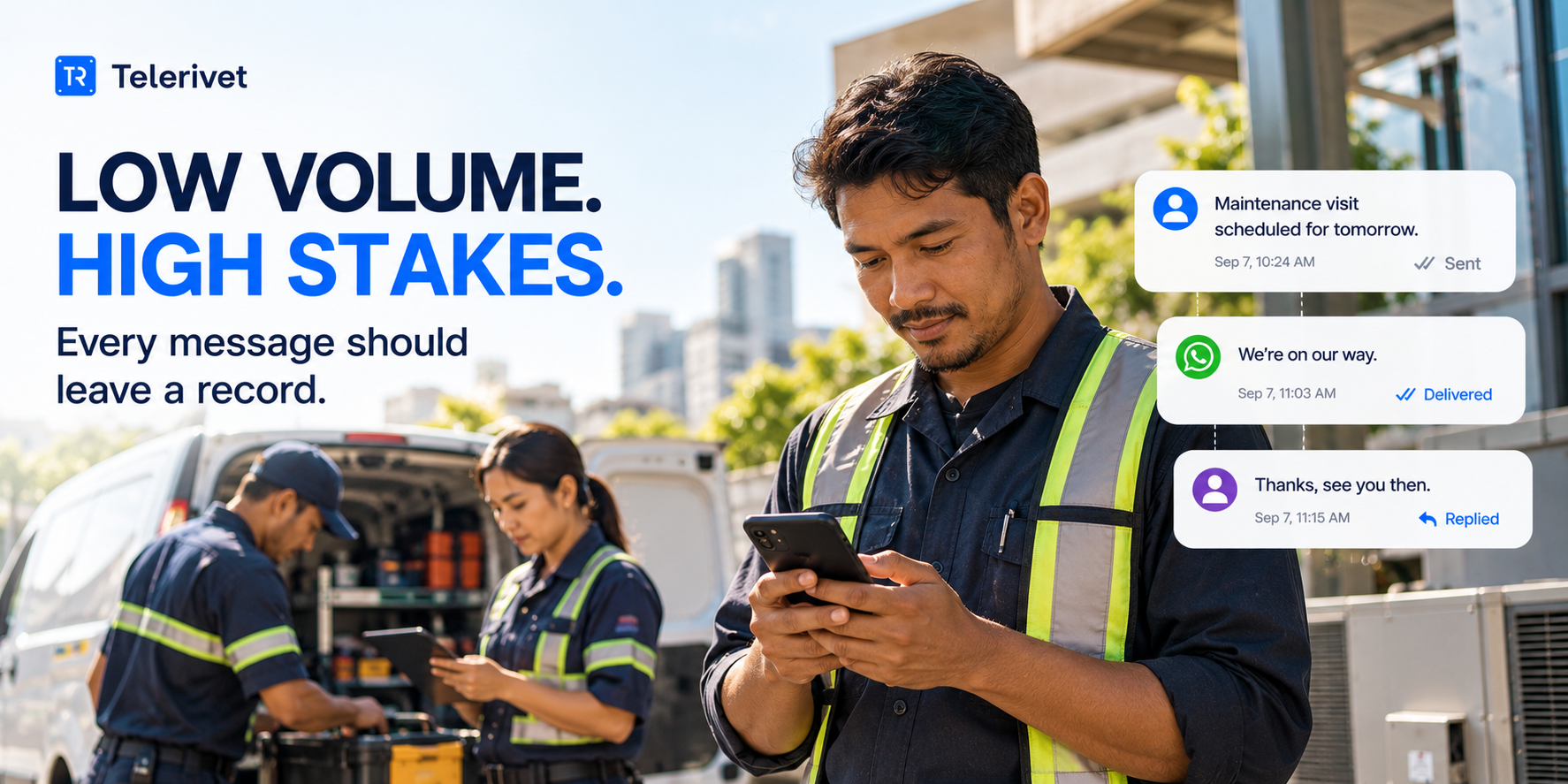
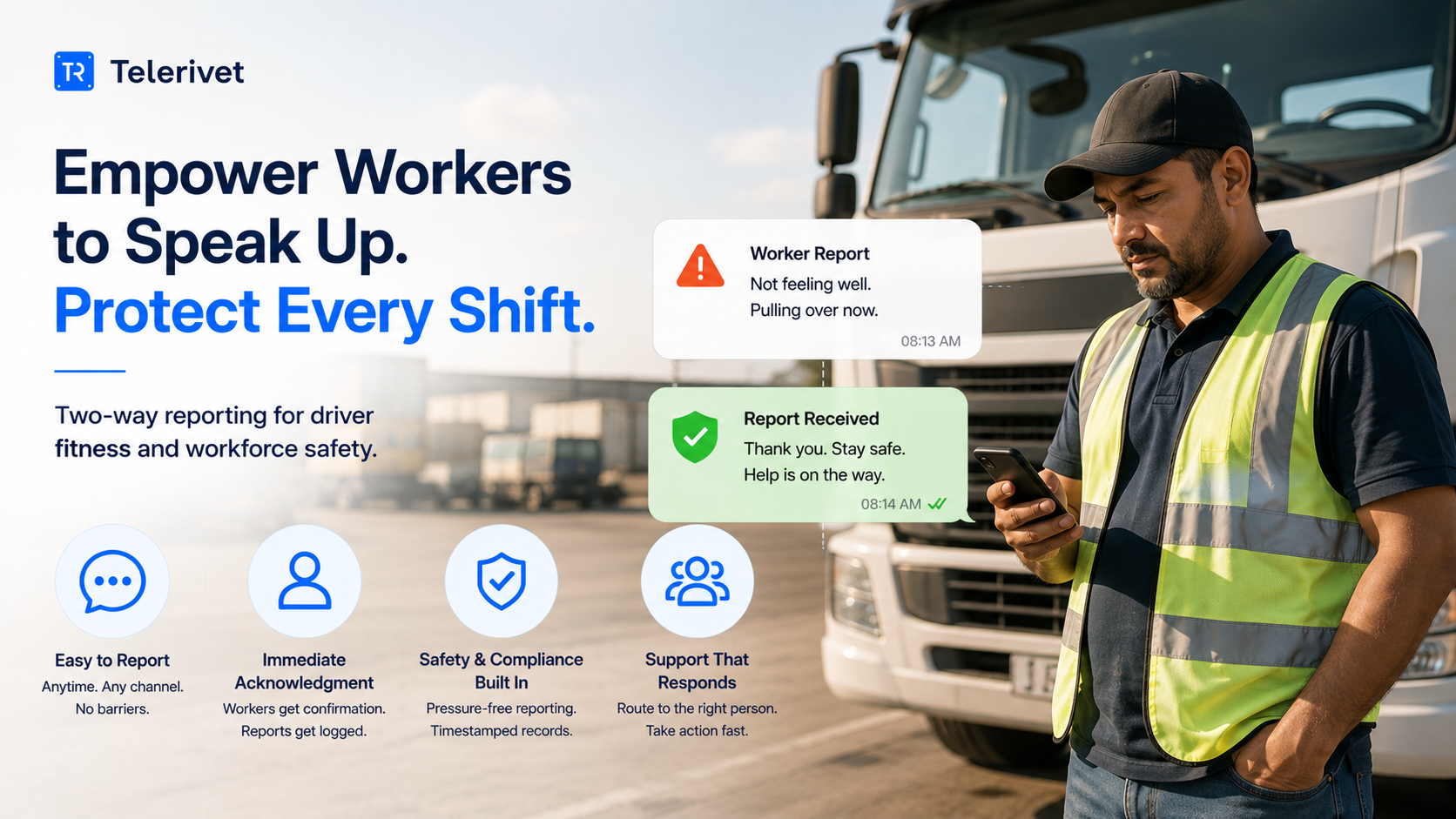
What the NHVR Unfit to Drive Duty Signals for Field Workforce Safety Reporting
Sep 1, 2026
From August 1, 2026, Australian heavy vehicle drivers operate under an expanded legal duty. The NHVR's unfit to drive duty gives drivers of any heavy vehicle over 4.5 tonnes the legal standing to stop driving, and requires employers to support them in reporting fitness concerns without pressure or adverse consequences. It replaces a narrower rule that only covered fatigue, with one that covers physical illness, injury, medication side effects, and mental health.
The Flat Part of the Curve: What Buyers Miss About Messaging ROI
Aug 31, 2026
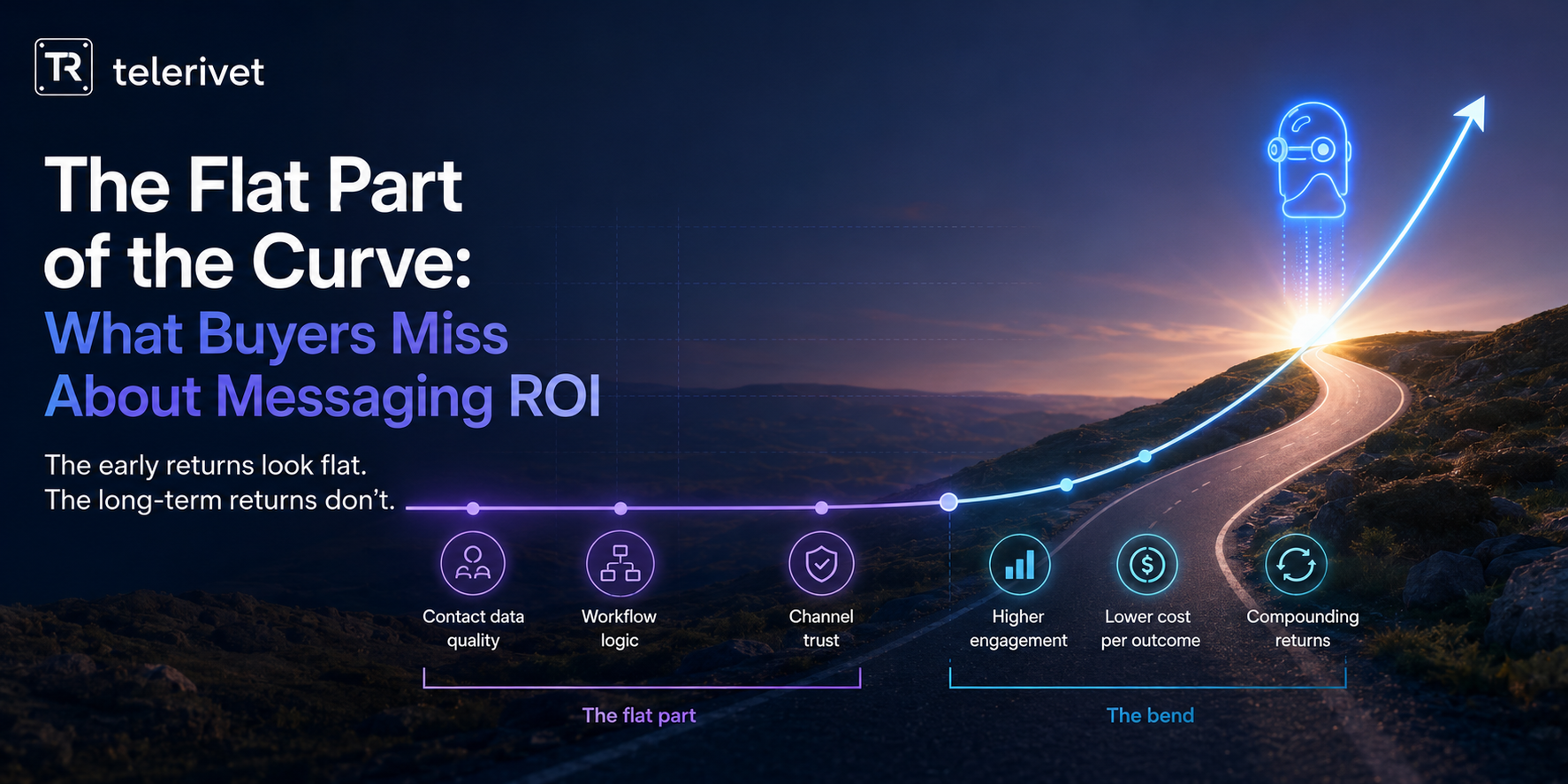
The part almost everyone misses about exponential curves is that for most of their length, they look like nothing is happening. The early stretch of a real compounding curve is nearly flat, indistinguishable from going nowhere.
Business messaging ROI works the same way: a communication program that is building genuine operational value will appear to underperform for months before the returns become visible.
That flatness is exactly why compounders get underestimated, including by themselves, right up until the bend.
Read more »
This is a pattern that repeats across organizations running communication programs at scale. A decision-maker approves the investment, watches the first two quarters, concludes that the returns are thin, and makes one of two moves: they scale back the program, or they switch vendors and start over. Both moves are the same mistake. Both are stepping off the curve right before it turns.
How Civic Observation Programs Coordinate Hundreds of Volunteers in Real Time
Aug 24, 2026
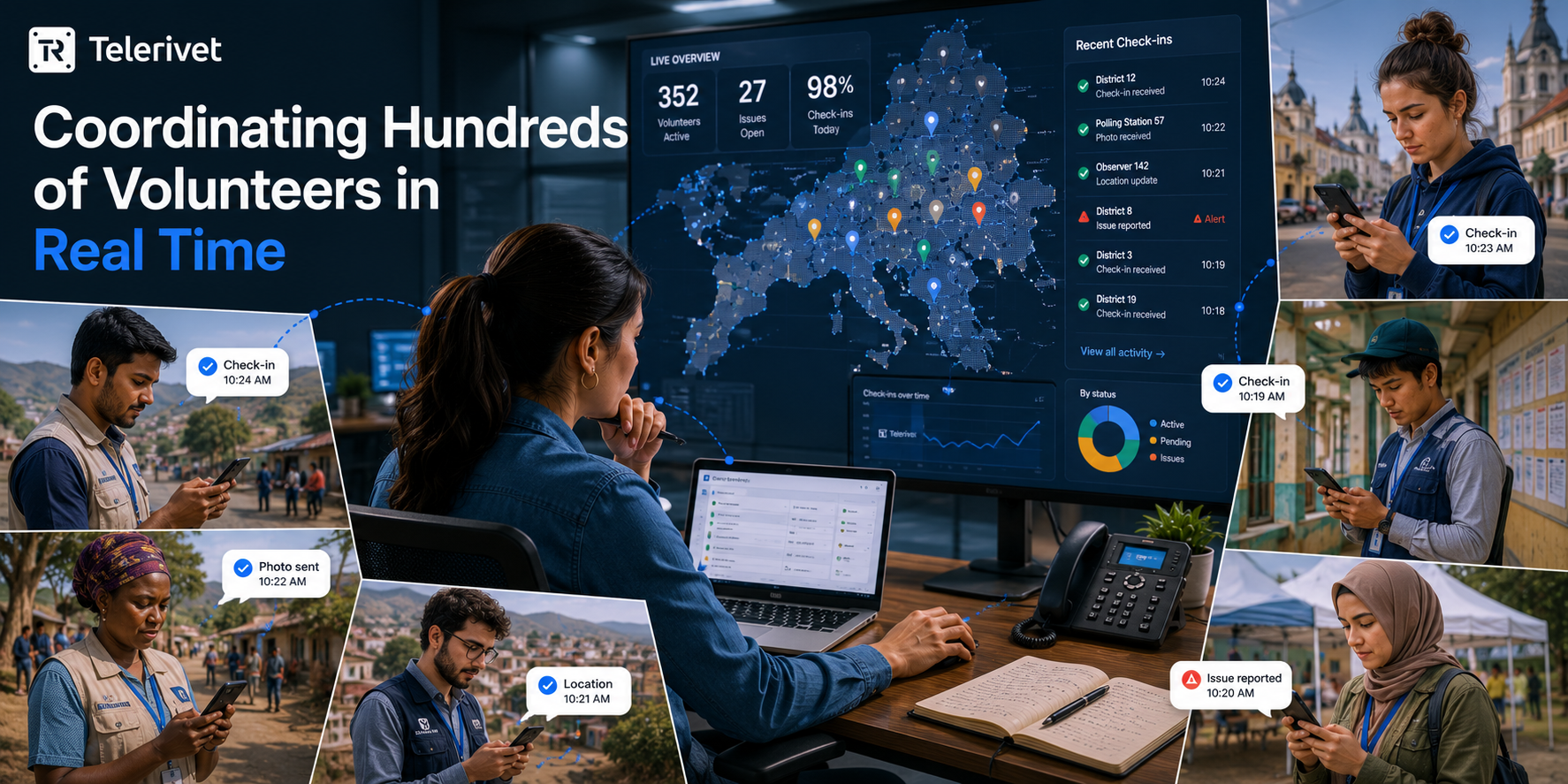
Civic observation field coordination is the real-time communication workflow that connects a central operations team with distributed volunteers across three phases: assignment dispatch before the window opens, structured status reporting during it, and escalation routing when anomalies arise. In most emerging markets, this workflow runs on SMS because SMS is the only channel that reaches every volunteer regardless of device type, data plan, or connectivity level.
Running a civic observation program is one of the more demanding field coordination problems in the public sector. You have hundreds or thousands of trained volunteers deployed across dispersed locations. The operational window is compressed and often unpredictable. Every check-in missed, every assignment unclear, every escalation that reaches the wrong person has consequences that compound quickly. And unlike most field programs, there is rarely a second window to fix what went wrong.
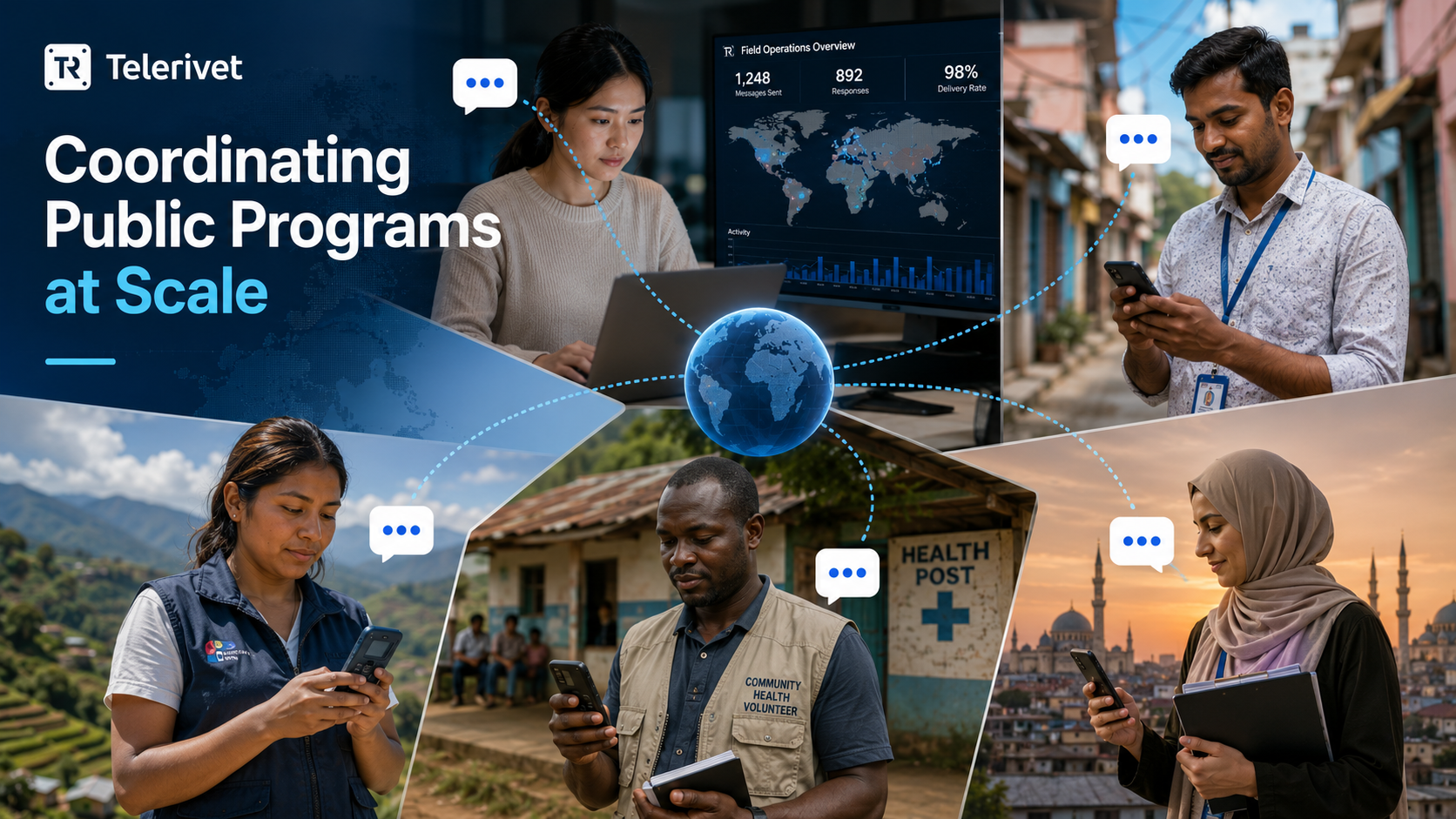
When the Work Happens Off the Grid: Coordinating Public Programs at Scale
Aug 17, 2026
Field coordination for public programs is the real-time exchange of instructions, status reports, and alerts between a central operations team and distributed agents or participants in the field. Across most of the world, this workflow runs on SMS because SMS is the only channel that works everywhere.
When I was a Peace Corps volunteer in Tanzania, I learned something that has shaped how I think about technology ever since. The most important work people were trying to accomplish didn't happen where the internet was. It happened in villages connected by dirt roads, in health posts with no reliable power, in community centers where a feature phone was the most sophisticated device in the room. The question was never whether people wanted to coordinate or communicate at scale. The question was what tools were actually usable in the conditions they were operating in.
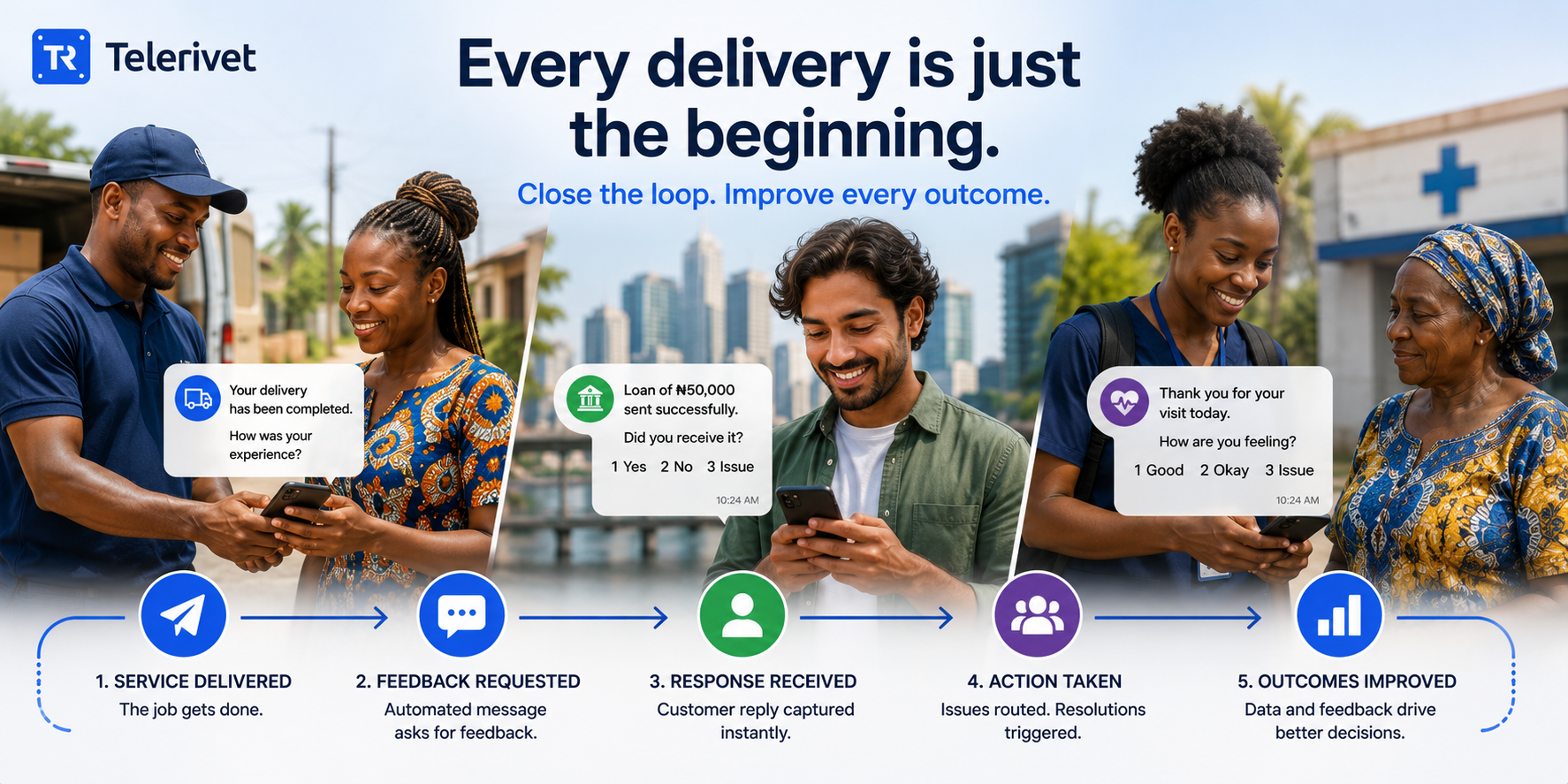
The Delivery Was the Easy Part: Why the Feedback Loop Is the Workflow That Gets Skipped
Aug 13, 2026
A post-service feedback workflow is the structured sequence of communication that runs after a service event to confirm delivery, capture the recipient's experience, and route any follow-up action to the right team. It is not a survey. It is not a customer experience research function. It is the final stage of the workflow itself, and in most organizations it is missing.
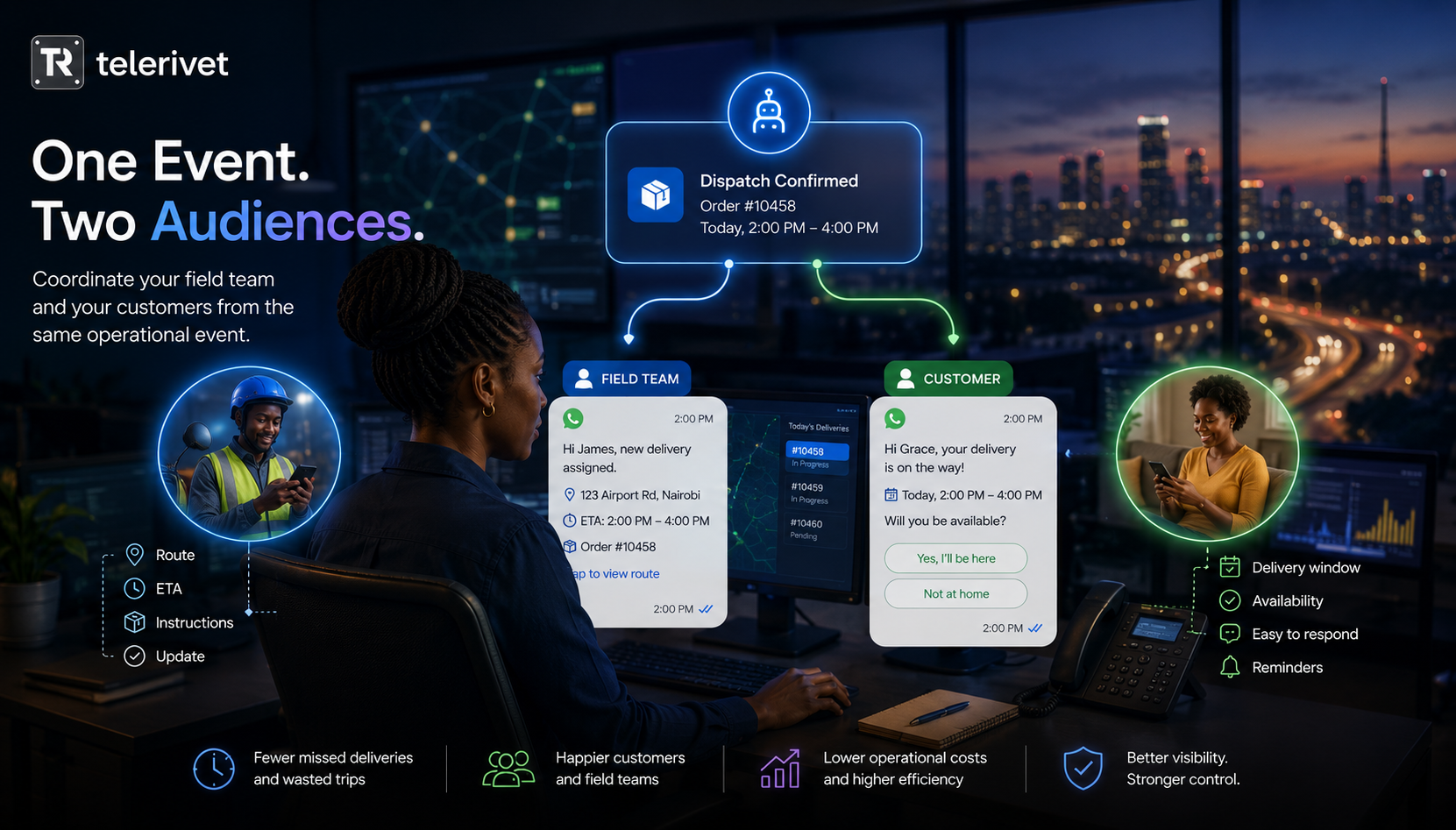
The Simultaneous Coordination Problem: Your Field Team and Your Customer Both Need a Message at the Same Time
Aug 11, 2026
Most organizations that run field operations have learned to communicate with their field teams. They send dispatch instructions. They receive delivery confirmations. They track location and status through some combination of messages, calls, and spreadsheet updates. That part, however imperfectly, tends to work.
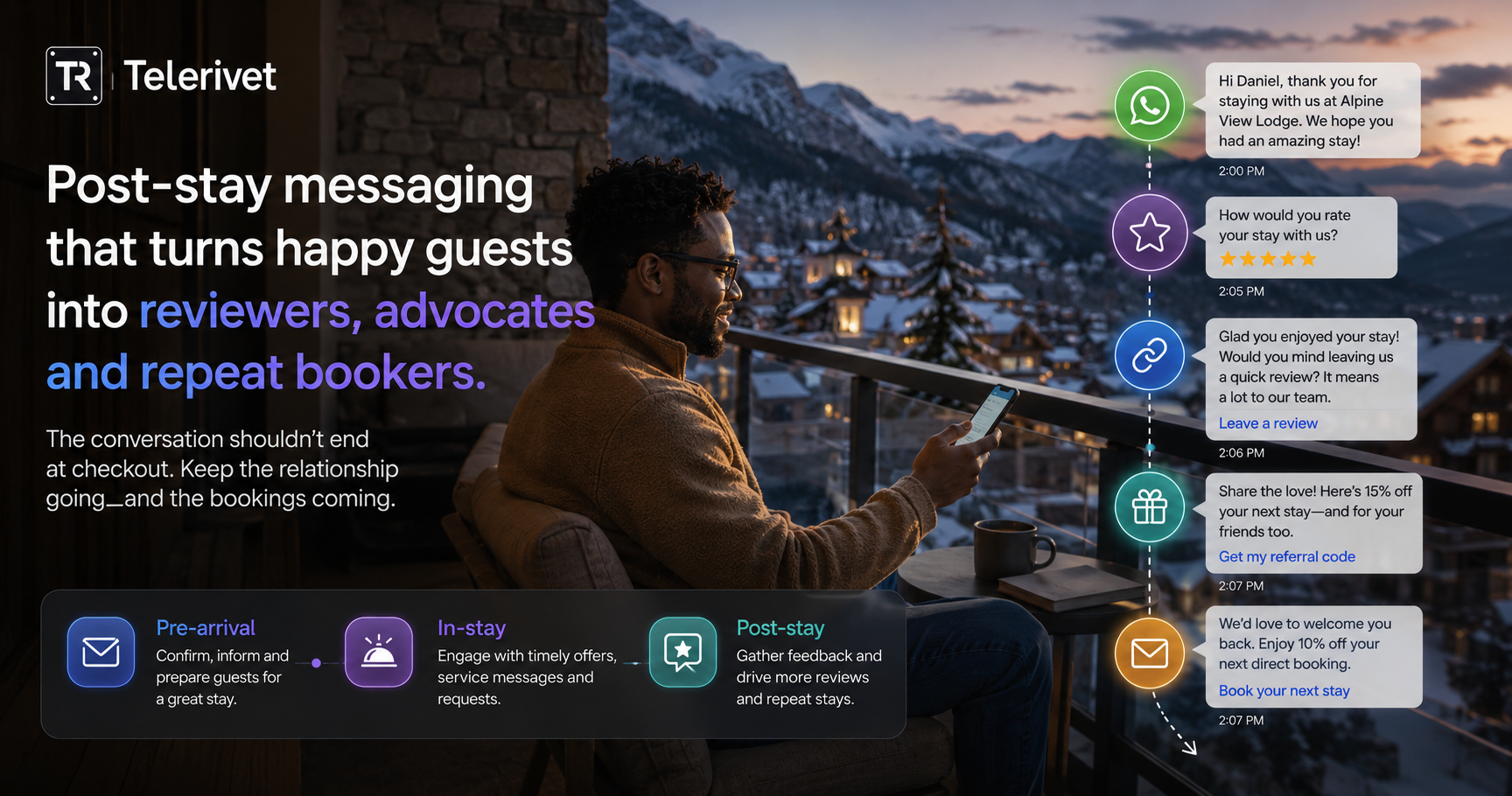
After Checkout: The Post-Stay Messaging Playbook for Boutique and Independent Hotels
Aug 6, 2026
What is post-stay hotel messaging? Post-stay messaging refers to automated communication sent to guests after checkout. For boutique hotels and independent hosts, a post-stay sequence typically includes a satisfaction check, a branching review request that routes positive responses to a public review platform and negative responses to a private resolution path, a referral or discount code, and a re-engagement message ahead of the next booking season. WhatsApp is the most reliable channel for post-stay communication with international guests because it works on WiFi regardless of which SIM the guest is using after returning home.
The guest has checked out. They are in a taxi to the airport, or already at the gate, or back home sorting through their photos. For most boutique hotels, independent resorts, and multi-property Airbnb or Vrbo hosts, this is where the relationship ends. No message goes out. The next communication, if it happens at all, is a generic marketing email weeks later that the guest has already forgotten how to connect to the stay they had..
Consumer Code Promotions Without a Promo Management Platform
Aug 1, 2026
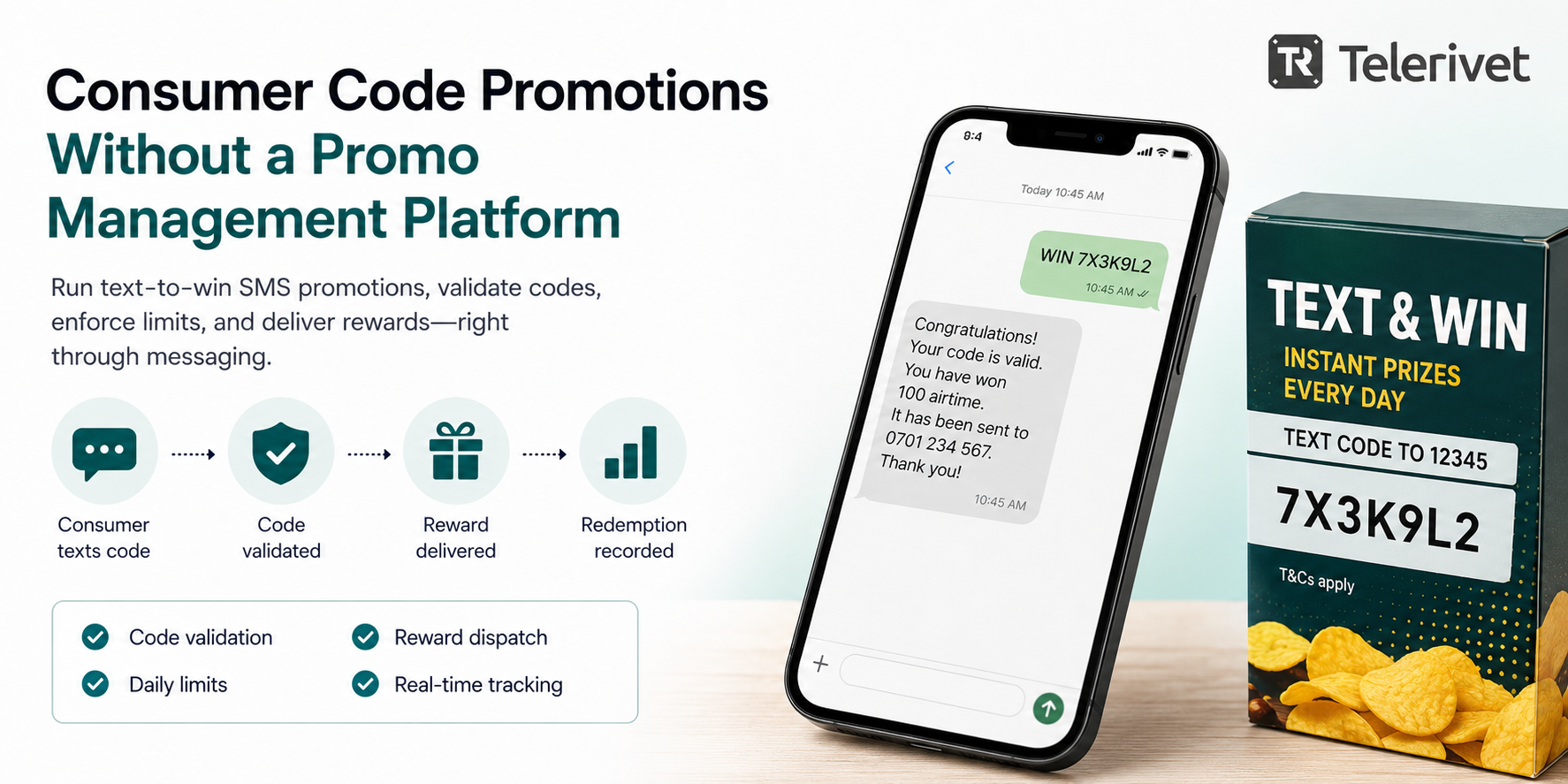
A consumer SMS code promotion is a campaign in which customers send a code (found on a product, receipt, or packaging) to a short code or long number via SMS, and receive a reward or response based on the validity and status of that code. Running one without a dedicated promotional management platform requires the same core functions to be handled somewhere: code validation, duplicate and fraud prevention, reward dispatch, and response logic for invalid or expired codes. The question is whether those functions need a standalone platform or whether they can be built into a configurable messaging workflow..

How to Capture and Qualify Leads at an Auto Show via WhatsApp
Jul 28, 2026
WhatsApp lead capture at an auto show is the use of a QR code or short number displayed at a brand stand to initiate a WhatsApp conversation with a visitor, collecting contact details, qualifying interest, and routing the lead to the right follow-up workflow, all without paper forms or manual data entry. The operational advantage is that the lead exists in a structured, actionable format before the visitor has left the floor. The most common alternative, collecting paper forms and entering them manually after the event, loses between 20% and 40% of leads to illegible handwriting, incomplete entries, or delayed follow-up..
Hotel Guest Messaging: A Practical Guide for Independent and Mid-Market Properties
Jul 25, 2026
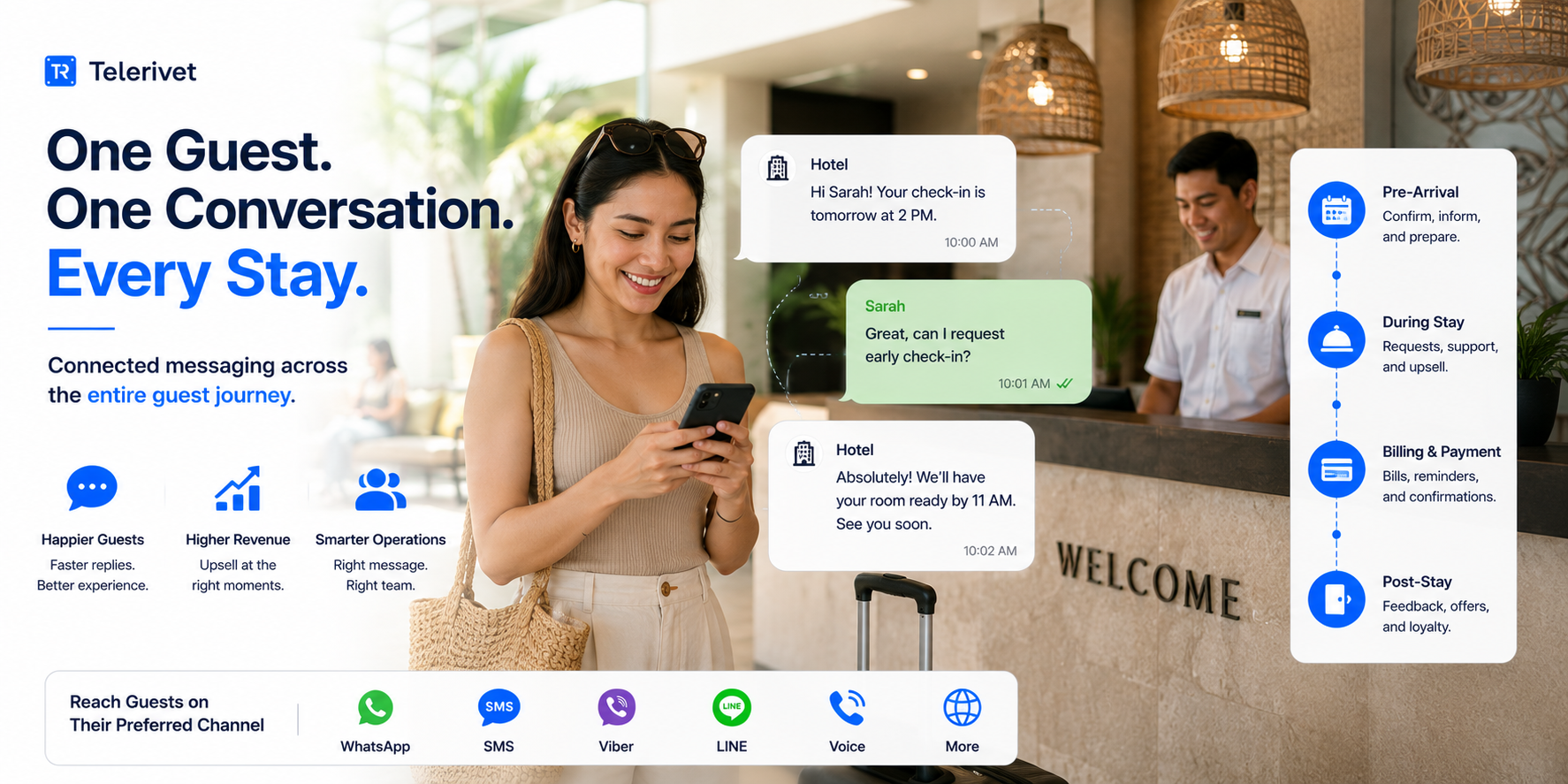
The usual setup at a mid-market hotel goes like this: reservations handles WhatsApp inquiries on one number. The front desk manages arrival coordination on another. Housekeeping works through a shared group chat. F&B takes room service requests through a fourth number entirely, saved in the personal phone of whoever is on shift.